
Our new scoping review published in Frontiers in Toxicology explores the potential of human platelet lysate (hPL) to replace animal-derived products (FBS) in human cell culture. This study addresses a long-standing challenge in cell culture: the need for an ethically sourced, reproducible, and a more human-relevant supplement to grow blood-forming cells ex vivo.
The review analyzed five studies that directly compared hPL and FBS. Despite inconsistencies in reporting and hPL production methods, hPL consistently matched or outperformed FBS in key areas, such as cell identity, viability, fold expansion, and functional potential. These are promising results and can improve the current standard of understanding diseases and finding treatments.
Yet, the review also highlights major roadblocks that hinder progress in the field. There is a notable lack of standardized hPL production protocols and low transparency regarding the reporting standards. These prevent reproducibility and make the results of these studies difficult to compare.
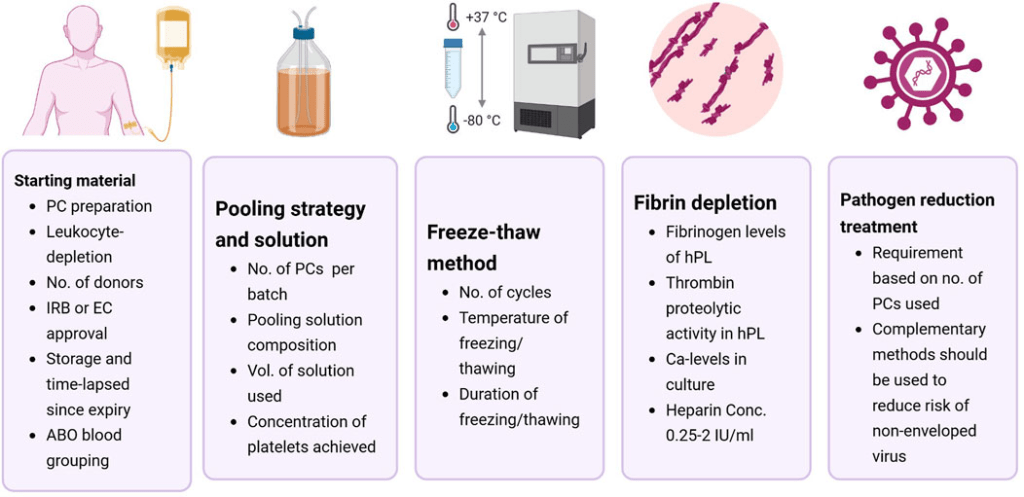
Figure 3 from the article outlines the key parameters to consider for producing hPL from expired platelet concentrates. The process involves selecting appropriate starting material, pooling strategies, controlled freeze-thaw cycles, fibrin depletion protocols, and optional pathogen reduction steps—all essential to ensuring product consistency, safety, and suitability for research applications.
While hPL isn’t yet a universal solution, this review suggests that it could be a crucial stepping stone toward sustainable and scalable alternatives to animal-derived supplements in hematopoietic cell research.
Read the full article here.
More from our blog:
- Beyond FBS: Making Sense of Platelet-derived Supplement Terminology
- Bradford vs. Lowry for Total Protein Quantification in Cell Culture Supplements
- hPL vs FBS: maintaining mesenchymal stromal cell identity
- MTT vs. TBE for Cell Viability in Supplement Comparison Studies
- ULQA Scientific at NCBB-26: Exploring the Future of Biotechnology and Biomedicine


Leave a Reply