

Your donation can save lives!
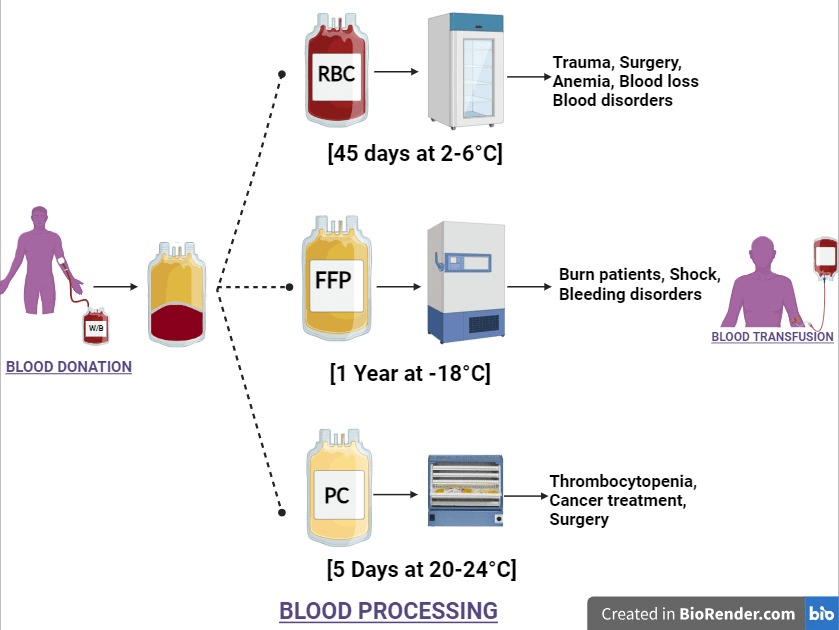
This World Blood Donor Day (June 14, 2024) marks “20 Years of Celebrating Giving: Thank You, Blood Donors.” It is a day dedicated to acknowledging and expressing gratitude to the individuals who generously contribute blood donations. Globally, millions of individuals suffer from congenital diseases that affect their blood production and function. Patients with thalassemia, sickle cell anemia, and aplastic anemia require blood transfusions every 15 to 30 days. Additionally, individuals with chronic renal failure and cancer rely on frequent blood transfusions for managing their conditions. Each whole blood donation can be separated into three blood products: red blood cells, plasma, and platelets. Therefore, every whole blood donation has the potential to save up to three lives!
Father of blood banking

While today it is routine practice in blood banks to separate whole blood into its components and store them until further use, it was not always the case. In the early 1900’s, Dr. Charles R. Drew was the first researcher who discovered that separating blood into its components can better benefit patients. As an expert in component preparation, he led the first large-scale blood bank project during World War II. The project was known as “Blood for Britain,” which delivered over 5,000 L of plasma to soldiers and civilians. To this day, his pivotal work on developing methods for processing and preserving blood plasma is used in blood banks worldwide.
Championing blood accessibility to all
Dr. Drew also openly criticized and protested against racial segregation in blood donations. This meant that several eligible donors were not allowed to donate blood, or patients in need could not receive safe blood. Although the situation has changed in North America and Europe, safe blood remains unavailable to large segments of the population in low- and middle-income countries. Issues underlying accessibility include mismanaged blood transfusion services and a lack of awareness of how blood donations and component preparation can help save lives.
Here’s how you can make a difference:
- Schedule Your Donation: Visit your local blood bank or donation centre and make an appointment to donate blood. Regular donations are crucial to maintaining a stable supply of blood components.
- Spread the Word: Share your donation story and encourage others to donate. Use social media platforms to raise awareness about the importance of blood donations and the impact of component preparation.
- Educate Yourself and Others: Learn more about the need for blood donations and the specific uses of blood components. Educate your community about the benefits of donating blood for component preparation.
Join us in celebrating 20 years of giving and make a commitment to donate blood for component preparation. Together, we can ensure that everyone has access to the lifesaving blood components they need.
Thank you for your generosity and compassion. Happy World Blood Donor Day!

 ULQA Scientific
Leave a comment